
Top AI Companies in 2026: Who’s Leading the Artificial Intelligence Race
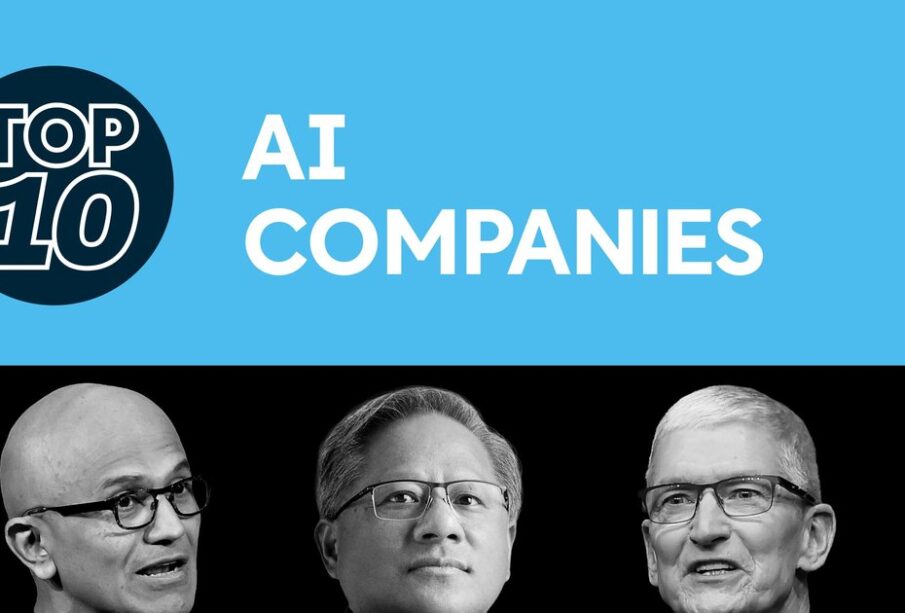
The top ai companies in 2026 are Anthropic, OpenAI, Google DeepMind, Microsoft, Meta AI, Nvidia, and xAI. Together, they account for the vast majority of frontier AI research, the most capable large language models available, and the infrastructure that powers AI applications worldwide. The competition between them is intensifying—and understanding who’s leading in which areas matters whether you’re a consumer, investor, or job seeker.
What’s changed in 2025-2026 is the shift from lab experiments to real-world deployment. The question is no longer “can AI do this?” but “which company’s AI does it best, most safely, and at the right price?” The answers differ significantly depending on what you’re evaluating – raw capability, safety, cost, or enterprise readiness.
Top AI Companies at a Glance
| Company | Primary Focus | Flagship Product | Founded | Est. Valuation |
|---|---|---|---|---|
| Anthropic | Safe, reliable AI assistants | Claude (Sonnet, Opus) | 2021 | ~$61B |
| OpenAI | General AI + consumer products | ChatGPT, GPT-4o, o3 | 2015 | ~$157B |
| Google DeepMind | Research + Google integration | Gemini 2.0, AlphaFold | 1998/2010 | Public (Alphabet) |
| Microsoft (AI) | Enterprise AI + infrastructure | Copilot, Azure AI | 1975 | ~$3T market cap |
| Meta AI | Open-source AI + social media | Llama 3, Meta AI assistant | 2004 | ~$1.4T market cap |
| Nvidia | AI chips and infrastructure | H100/H200 GPUs, CUDA | 1993 | ~$2.5T market cap |
| xAI | Real-time AI + social integration | Grok 3 | 2023 | ~$50B |
| Mistral AI | Open & efficient models | Mistral Large 2 | 2023 | ~$6B |
Company Profiles
Anthropic
Anthropic was founded by former OpenAI researchers with an explicit focus on AI safety – meaning the company’s core mission is developing AI that is safe, reliable, and understandable, not just capable. Its Claude models (currently Sonnet 4.6 and Opus 4.6) are widely regarded as the most consistent performers for complex reasoning, coding assistance, and long-document analysis. Anthropic’s Constitutional AI approach and emphasis on interpretability research set it apart philosophically from competitors.
OpenAI
OpenAI popularized the current era of AI with ChatGPT’s launch in late 2022, and it remains the most widely recognized AI company among general consumers. GPT-4o and the reasoning-focused o3 model continue to push capability boundaries, while ChatGPT maintains roughly 200 million weekly users. The company has a complex relationship with Microsoft, which has invested over $13 billion and deeply integrated OpenAI models into its products.
Google DeepMind
Google’s AI arm is the combination of two storied labs: the original Google Brain and the UK-based DeepMind. The merged entity produces some of the world’s most significant AI research – AlphaFold’s protein structure predictions have arguably had more scientific impact than any other AI project in history. Gemini is their LLM answer to GPT and Claude, deeply integrated into Google Search, Docs, and Android.
Microsoft
Microsoft’s AI strategy is infrastructure-first. Through Azure, they provide the cloud compute that most AI companies – including Anthropic and OpenAI – run on. Their Copilot products are embedded in Office 365, GitHub, and Windows, giving them an enterprise distribution advantage that no pure-play AI company can match. They don’t need to win the model race if they own the platform.
Meta AI
Meta’s most consequential AI contribution is Llama – an open-source model family that any developer can download, modify, and deploy. This has fundamentally shifted the AI landscape by enabling companies and researchers who can’t afford to build from scratch. Llama 3 is competitive with closed models on many benchmarks, which forces competitors to keep improving or lower prices. Meta’s billions in infrastructure investment makes Llama a long-term commitment, not an experiment.
Nvidia
Nvidia doesn’t build AI applications – it builds the picks and shovels that every AI company uses. Their H100 and H200 GPUs are the dominant AI training chips, and their CUDA software ecosystem creates lock-in that AMD and Intel have struggled to break. Nvidia’s market cap reflects a simple reality: whoever wins the AI race, they almost certainly need Nvidia hardware to get there.
xAI (Grok)
Founded by Elon Musk in 2023, xAI has grown faster than most expected. Grok 3’s integration with X (Twitter) gives it a unique real-time information advantage – it has access to live social data that other models don’t. The company raised at a $50 billion valuation in early 2025, signaling serious investor belief in its trajectory. It’s not yet at the capability frontier of Claude or GPT-4o on most benchmarks, but the gap is narrowing.
What Sets These Companies Apart?
| Company | Biggest Strength | Key Weakness |
|---|---|---|
| Anthropic | Safety research, reliable outputs, enterprise trust | Smaller consumer footprint than OpenAI |
| OpenAI | Consumer brand awareness, GPT ecosystem | Microsoft dependency, governance concerns |
| Google DeepMind | Research depth, search integration, scale | Slower to productize research |
| Microsoft | Enterprise distribution, cloud infrastructure | Not a model leader; dependent on partners |
| Meta AI | Open-source leadership, data scale | Reputational friction, no standalone AI product |
| Nvidia | Hardware monopoly on AI compute | Single product dependency; geopolitical chip risks |
| xAI | Real-time data via X, fast-moving team | Late to the frontier, limited enterprise presence |
AI Companies to Watch Beyond the Top Tier
- Mistral AI – French startup producing highly efficient open-weight models; punching above their weight
- Cohere – Enterprise-focused LLMs with strong retrieval-augmented generation capabilities
- Perplexity AI – AI-native search engine with rapid user growth
- Scale AI – The data infrastructure company that most AI models are trained on
- Runway ML – Leading the AI video and creative media generation space
How to Evaluate an AI Company
For investors: look at compute access (do they have enough GPU capacity?), model velocity (how frequently are they shipping improvements?), and revenue diversification (enterprise contracts, API revenue, consumer subscriptions).
For job seekers: safety culture, research publication rate, and whether the company’s mission aligns with your values matter as much as salary. AI companies move fast – your role will look different in 18 months regardless of where you land.
For consumers and businesses: focus on the actual product experience rather than benchmark scores. The best benchmark is whether the model helps you do your specific job better – and that varies enormously by use case.
The AI industry in 2026 is genuinely exciting and genuinely competitive. No single company has won – and the decisions these organizations make about safety, access, and deployment will shape how AI affects everyone over the next decade.

Leave a reply



-
Heading on Holiday? Keeping an Eye on Your Business From Afar
For a lot of small business owners, taking a proper holiday feels ...